How to Budget for a Fully Integrated Pool and Landscape Design
Planning Beyond the Pool Itself
When homeowners begin exploring a custom pool, the initial question is often straightforward: How much does the pool cost?
A more strategic question is: What does it cost to build a complete outdoor environment around the pool?
In Colorado, the difference between installing a pool and creating a fully integrated pool-centered landscape is significant — both structurally and financially.
Understanding how these systems work together helps set realistic expectations from the beginning.
The Pool Is Only One Component
A custom shotcrete pool in Colorado may begin around $120,000–$175,000+.
However, a fully integrated outdoor environment typically ranges from $250,000–$500,000+, depending on site conditions and scope.
Why?
Because the surrounding systems often represent an equal — or greater — investment than the vessel itself.
Structural Site Preparation
Before the pool shell is even formed, significant structural work may be required:
Excavation and soil export
Over-excavation for expansive soils
Base stabilization
Engineered grading
Subsurface drainage systems
In Colorado’s freeze–thaw climate, structural preparation protects long-term performance.
Decking and Hardscape Integration
The area surrounding the pool frequently includes:
Natural stone or architectural pavers
Coping and edge detailing
Multi-level patio environments
Integrated steps and transitions
Seat walls or raised beam elements
Base preparation and drainage beneath these surfaces significantly impact both cost and longevity.
Large-format materials and refined detailing increase investment but elevate overall cohesion.
Retaining and Elevation Management
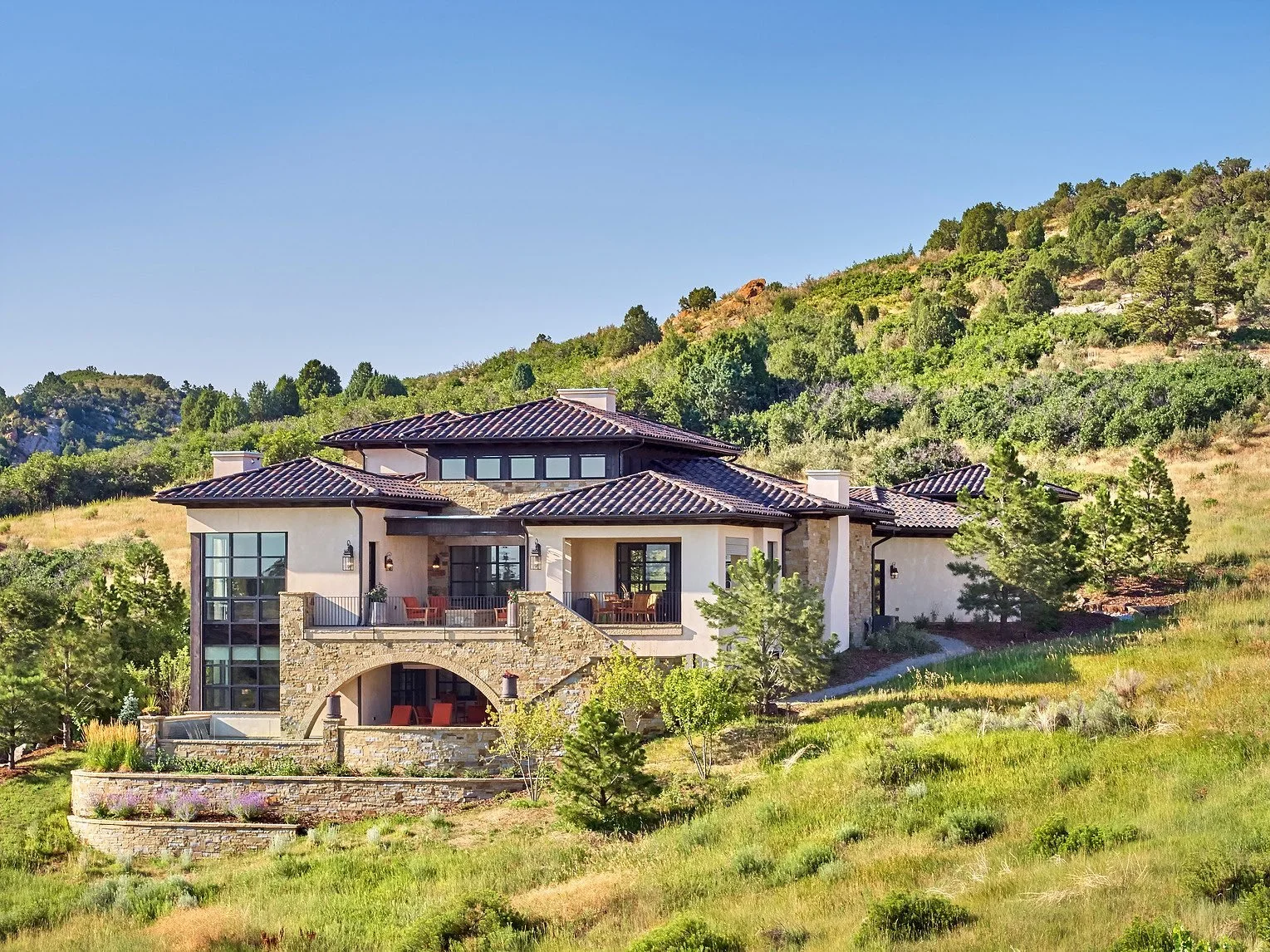
Many Denver properties require grade correction to accommodate a pool.
Integrated projects may involve:
Engineered slope transitions
Multi-tiered outdoor rooms
When elevation change is addressed thoughtfully, the pool feels embedded within the landscape — not inserted into it.
Outdoor Living Amenities
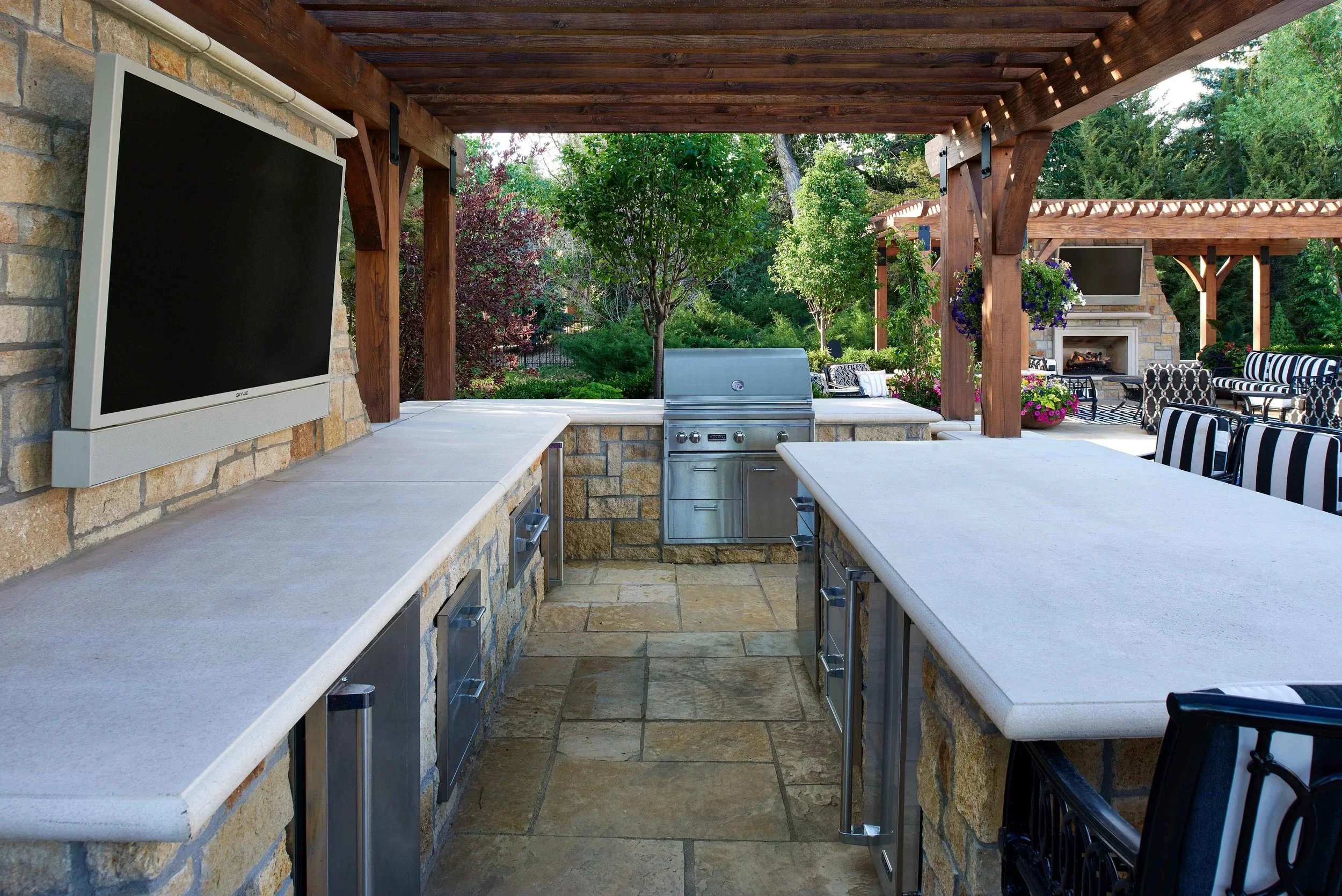
A fully integrated environment often includes additional architectural elements such as:
Outdoor kitchens
Fire features
Shade structures
Integrated seating walls
Spa integration
When these amenities are planned alongside the pool, materials, circulation, and proportions remain cohesive.
Lighting and Electrical Coordination
Architectural outdoor lighting typically accompanies integrated projects and may include:
Step lighting
Subtle pool-edge illumination
Tree uplighting
Pathway lighting
Automation controls
Lighting planned during the design phase ensures concealed conduit placement and balanced fixture distribution.
Planting and Landscape Design
Planting plays a critical role in softening hardscape transitions and framing water features.
Integrated design often includes:
Layered perennial beds
Privacy screening
Accent trees
Irrigation zoning improvements
Planting is not decorative afterthought — it completes the composition.
Drainage: The Hidden Investment
Water management becomes even more critical when introducing a pool.
Drainage must direct water away from:
The pool shell
Decking surfaces
Equipment pads
Adjacent foundations
Subsurface systems are often invisible, but they protect the entire investment.
A Realistic Budget Framework
In the Denver market, an integrated pool-centered environment typically falls within:
$250,000–$350,000 for cohesive, well-structured renovations
$350,000–$500,000+ for more complex sites, multi-level designs, or higher-end materials
Every property differs, but understanding the relationship between pool cost and total environment cost prevents misalignment early in planning.
Why Integration Matters
Installing a pool independently and layering improvements later often results in:
Disconnected materials
Rework of existing hardscape
Higher overall long-term cost
When pool and landscape are designed together, the environment feels intentional — and performs accordingly.
Integration protects both aesthetics and structure
Final Perspective
A custom pool in Colorado is a structural undertaking.
A fully integrated pool and landscape design is an architectural one.
When grading, drainage, materials, lighting, and planting are aligned from the beginning, the result is a cohesive outdoor environment built to perform through seasonal extremes.
If you are evaluating a pool addition and want clarity around full-scope planning and realistic budgeting, we welcome a structured conversation about what integration truly requires.